 EN
How to Reduce Film Waste with a Premade Pouch Packaging Machine?
2026/09/20
Premade Pouch Machines: Reduce Film Waste, Cut TCO & Achieve Faster ROI

2026/09/20

Selecting the right equipment is one of the most critical decisions in flexible packaging operations. A premade pouch packaging machine represents a significant capital investment, and the choice between rotary and inline designs directly impacts production speed, floor space utilization, operational costs, and maintenance requirements. Understanding the core differences between these two primary architectures helps manufacturers and packaging professionals make informed decisions aligned with their production volume, facility constraints, and product specifications.
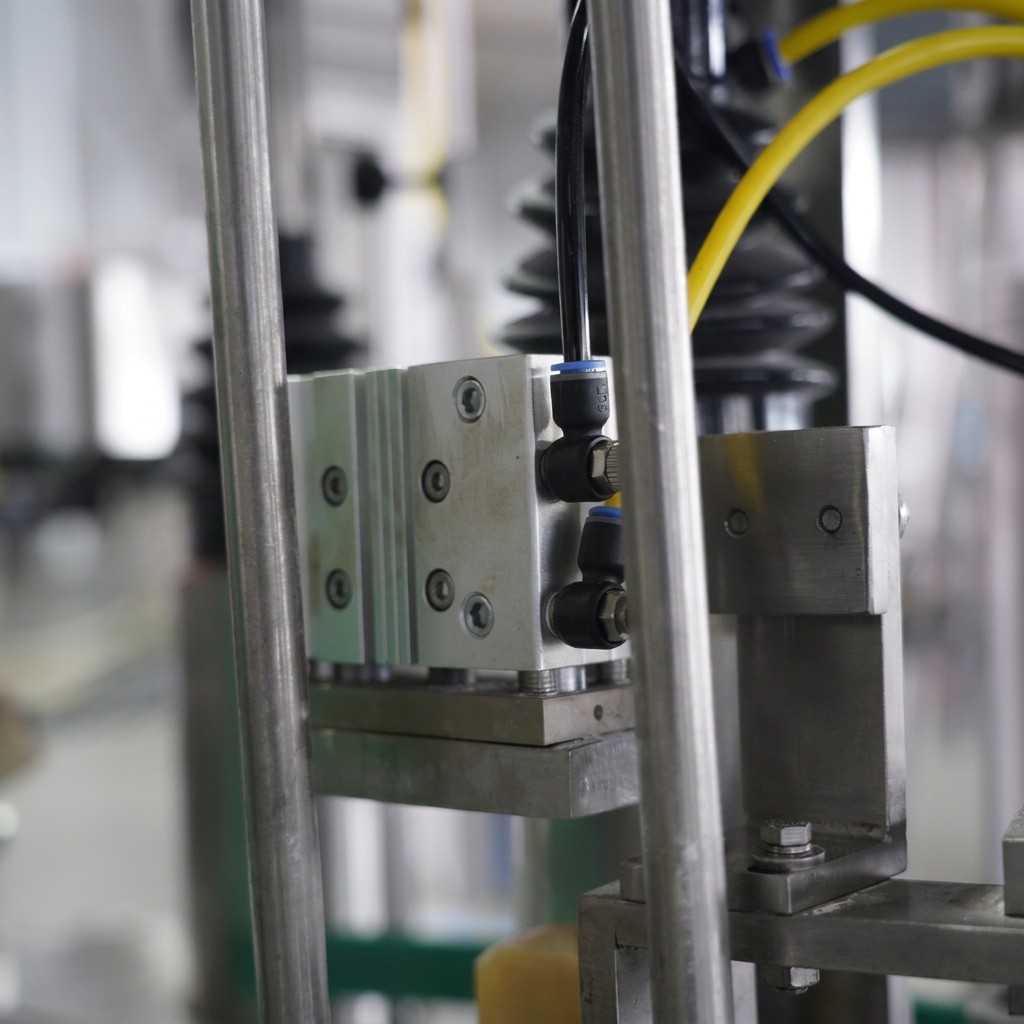
The premade pouch packaging machine category encompasses equipment designed to fill, seal, and finish pre-formed pouches with liquid, powder, granule, or semi-solid products. Rotary and inline configurations represent distinct mechanical philosophies, each optimized for different production scenarios. This comparison examines performance metrics, practical limitations, cost structures, and suitability criteria to help you evaluate which premade pouch packaging machine architecture best serves your operational needs.
A rotary premade pouch packaging machine operates around a central turret that indexes pouches through multiple stations sequentially. The premade pouch packaging machine rotates continuously or in timed intervals, positioning pouches beneath filling, sealing, and auxiliary stations. This carousel-style motion creates throughput advantages: rotary designs typically achieve 60 to 300 pouches per minute depending on pouch size, product viscosity, and seal complexity. The rotational mechanism allows simultaneous operations at different stations, meaning while one pouch fills, another seals, and a third ejects, creating overlapping cycle efficiency.
Rotary premade pouch packaging machine installations occupy a circular or semi-circular floor footprint considerably smaller than linear alternatives. This compact arrangement appeals to facilities with limited space or operations requiring integration into existing production lines. The premade pouch packaging machine's vertical orientation and concentrated footprint minimize facility modifications. However, rotary designs demand adequate ceiling clearance and unobstructed access for maintenance and pouch loading from multiple directions.
An inline premade pouch packaging machine arranges fill, seal, and finishing stations in a straight-line sequence. Pouches advance linearly from hopper or magazine feed through each operational stage before discharge. The premade pouch packaging machine typically operates at 30 to 150 pouches per minute, with throughput varying by product characteristics and seal requirements. Linear motion eliminates rotational inertia and permits precise synchronization of conveyance speed with individual station dwell times, making inline premade pouch packaging machine designs particularly suitable for delicate or irregular pouch geometries.
Inline premade pouch packaging machine configurations adapt readily to facility layouts with extended production zones or modular expansion requirements. The linear architecture permits straightforward incorporation of auxiliary equipment such as product weighing stations, label applicators, or vision inspection systems between primary operations. This premade pouch packaging machine style integrates naturally into conveyor-driven production ecosystems where upstream and downstream processes require sequential positioning.
Rotary premade pouch packaging machine systems generally command higher initial capital expenditure due to complex indexing mechanisms, precision turret construction, and sophisticated control systems. However, higher per-unit speed reduces cost-per-package metrics for high-volume operations. Inline premade pouch packaging machine equipment typically requires lower upfront investment and simpler mechanical architecture, reducing complexity and troubleshooting overhead. Operating costs favor rotary designs for volumes exceeding 100,000 units monthly; inline premade pouch packaging machine configurations prove more economical for mid-volume production of 30,000 to 80,000 units monthly.
Inline premade pouch packaging machine designs offer superior accessibility for routine maintenance and component replacement. Technicians approach sealing dies, filling nozzles, and drive systems from multiple angles without dismantling peripheral equipment. Rotary premade pouch packaging machine maintenance requires greater technical expertise due to turret complexity, seal station synchronization, and index mechanism tuning. Unplanned downtime for a rotary premade pouch packaging machine averages 4 to 8 hours; inline designs typically restore operation within 1 to 2 hours for equivalent failures.
Rotary premade pouch packaging machine systems excel with consistent pouch geometries and standardized fill volumes, as turret indexing depends on uniform dwell times. Introducing different pouch sizes or irregular shapes requires recalibration of turret speed and station positioning. Inline premade pouch packaging machine equipment accommodates greater pouch variety and size variation because linear conveyance speed and individual station dwell times operate independently. This flexibility makes inline premade pouch packaging machine designs preferred for contract manufacturers processing multiple product types and client specifications.
High-speed production exceeding 150,000 units monthly strongly favors rotary premade pouch packaging machine investment. The per-unit cost advantage and throughput advantage justify the higher capital requirement and maintenance complexity. Volumes between 40,000 and 100,000 monthly units represent a transitional range where cost-per-package and operational simplicity become equally important; detailed cost modeling is essential. Low-volume or seasonal production under 30,000 monthly units typically favors inline premade pouch packaging machine solutions due to lower capital requirements and simpler operation.
Facilities with limited floor area or ceiling height constraints should prioritize rotary premade pouch packaging machine configurations. The circular footprint uses vertical space efficiently and occupies less overall floor area. Conversely, operations with linear production zones or expansion capability should evaluate inline premade pouch packaging machine systems to simplify integration with existing conveyors, labeling equipment, and downstream packaging stages.
Inline premade pouch packaging machine equipment requires less specialized operator training and lower troubleshooting expertise. Staff transition and contingency planning prove easier with simpler architectures. Rotary premade pouch packaging machine operations demand higher technical proficiency for parameter adjustment, seal quality tuning, and predictive maintenance. Organizations with limited technical resources should carefully evaluate whether they can sustain rotary premade pouch packaging machine operation or would benefit from inline simplicity.
Rotary premade pouch packaging machine designs typically achieve 60 to 300 pouches per minute, while inline machines reach 30 to 150 pouches per minute. Rotary speed advantage stems from simultaneous operations at multiple stations during turret rotation. Speed capability depends on pouch size, product density, seal complexity, and cooling requirements. High-speed rotary premade pouch packaging machine systems justify their complexity and cost through superior throughput for standardized, high-volume applications.
Inline premade pouch packaging machine systems feature superior accessibility and require less technical expertise for routine maintenance and troubleshooting. Rotary premade pouch packaging machine equipment demands sophisticated understanding of indexing synchronization, seal station tuning, and turret mechanics. Unplanned downtime averages 1 to 2 hours for inline designs versus 4 to 8 hours for rotary premade pouch packaging machine equipment. Rotary systems justify higher maintenance complexity through per-unit cost savings in high-volume operations.
Monthly production volume is the primary decision factor. Volumes exceeding 150,000 units strongly favor rotary premade pouch packaging machine investment due to per-unit cost advantage. Production between 40,000 and 100,000 units monthly requires detailed cost modeling comparing capital investment, operating expenses, and maintenance overhead. Volumes below 30,000 units typically favor inline premade pouch packaging machine configurations, which offer lower capital requirements, simpler operation, and greater flexibility for product variation.

2026/09/20
Premade Pouch Machines: Reduce Film Waste, Cut TCO & Achieve Faster ROI

2026/09/20
Cut Premade Pouch Machine Changeover Time by 40% with Proven Best Practices

2026/09/20
Premade Pouch Machines: Boost Throughput, Cut Waste & Improve ROI

2026/09/20
Premade Pouch Machine: Boost Throughput, Cut Labor Costs & Improve Seal Integrity

2026/09/21
Premade Pouch Machine: Pouch Types, Materials & Filling Guide

