1. Project Origin & Initial Client Inquiry
This project began at a major food exhibition in late 2024, where we first connected with a coffee manufacturer from the EAEU market. They were looking to upgrade their production line and were initially interested in standard back-seal vertical packaging machines. We showed them videos of our standard small VFFS equipment to meet this immediate requirement.
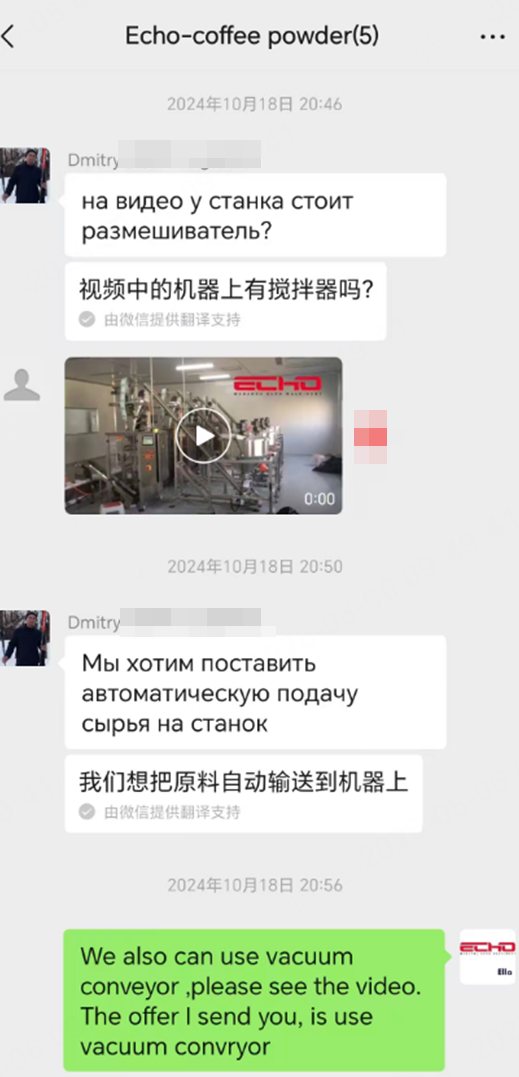
The initial inquiry from the client - inquiring about back-seal packaging machines.
However, looking at their current factory setup, they were relying on 5 old, standalone small VFFS machines. We realized that simply replacing these with 5 more small machines would not solve their underlying inefficiencies.
|
Client's existing 5 standalone VFFS machines - showing the cluttered, inefficient layout.
|
Close-up of the aging standalone equipment currently in use.
|
Our engineering team recognized that this manufacturer needed a multi-lane packaging machine and, crucially, an automated cartoning system at the end of the line. We introduced both concepts to the client, opening the door for a much more ambitious turnkey project.
2. Phase 1: The Preliminary Layout (November)
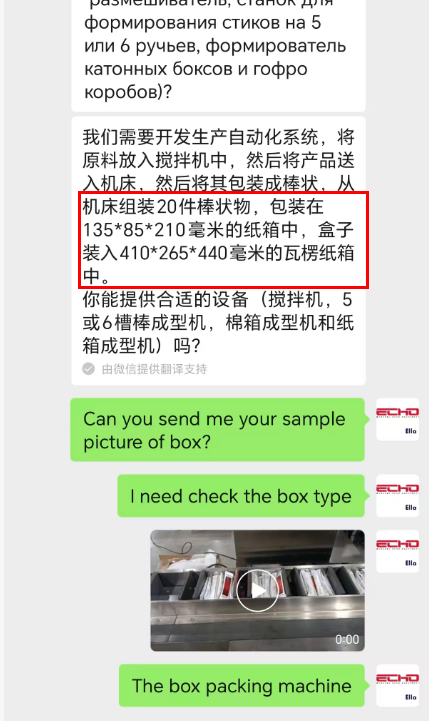
Our first preliminary proposal combined 5 new, modern small VFFS machines with a flighted feeding conveyor and a cartoning machine designed to pack 20 stick packs per carton. This concept was inspired by a successful coffee powder project we had previously completed in Russia.
WhatsApp discussion outlining the initial 5-machine + cartoning concept.
Initial 3D layout concept: Multiple small VFFS machines feeding into a single cartoner.
3. Phase 2: Precision Upgrade & Multi-Lane Innovation (December)
To drastically reduce the factory footprint and dramatically increase throughput, we revised the layout. The new proposal featured a High-Speed Multi-Lane Stick Pack Machine connected directly to the cartoner.
However, this advanced configuration introduced a new strict requirement from the client: 30g coffee sticks required an accuracy of ±0.5g. To guarantee this at high speeds, we integrated a highly specialized Multi-Lane Checkweigher capable of rejecting individual out-of-spec sticks across multiple lanes simultaneously.
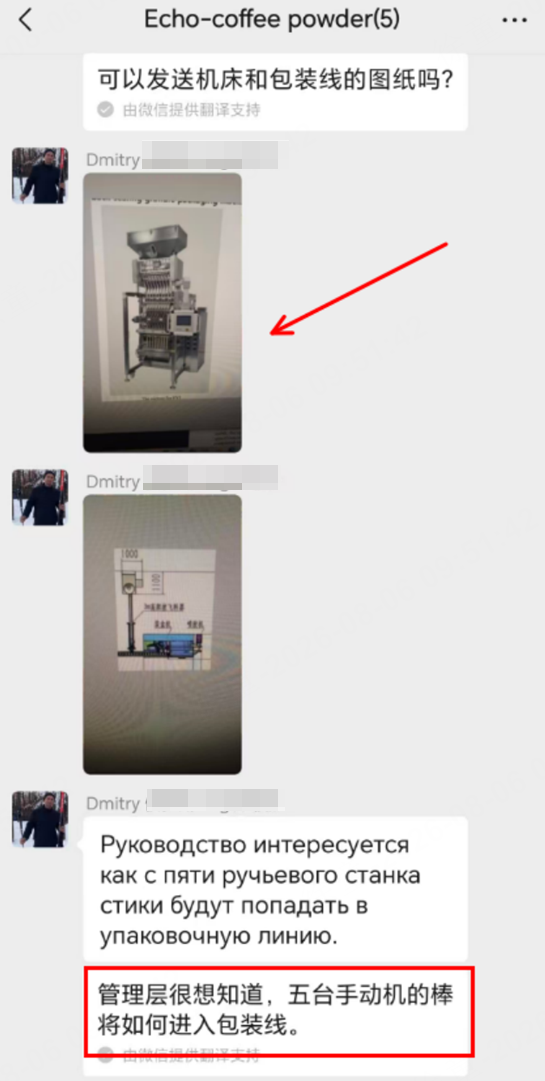
Detailed WhatsApp discussions regarding the ±0.5g weight precision requirement.
Technical debate about multi-lane former design - we recommended a fixed bag width to ensure maximum stability.
Through extensive negotiation, we convinced the client to fix the bag width on the multi-lane machine. Rather than sacrificing stability by making the formers interchangeable for multiple sizes, we prioritized maximum machine reliability at peak speeds for their core product.
Upgraded 3D concept featuring the Multi-Lane Machine, Multi-Lane Checkweigher, and Cartoner.
4. Phase 3: Solving the Hygiene Puzzle (February - March)
The final hurdle was raw material handling. We initially proposed a vacuum feeding system paired with 5 large food-grade plastic bins to hold the pre-mixed coffee powder. To expedite the process, we even offered the bins as part of the package.
However, the client raised a crucial food-safety concern: manually transferring blended powder between open bins would inevitably compromise hygiene and contaminate the product.
Client expressing valid concerns about open-bin powder handling and proposing a large integrated mixer.
This feedback was invaluable. We completely redesigned the front-end powder processing into a 100% closed-loop system. The final configuration featured a Dust-Free Powder Feeding Station, a Vacuum Feeder, an integrated 500L Industrial Mixer, and a Screw Elevator feeding directly into the multi-lane machine. This eliminated human contact with the coffee powder entirely.
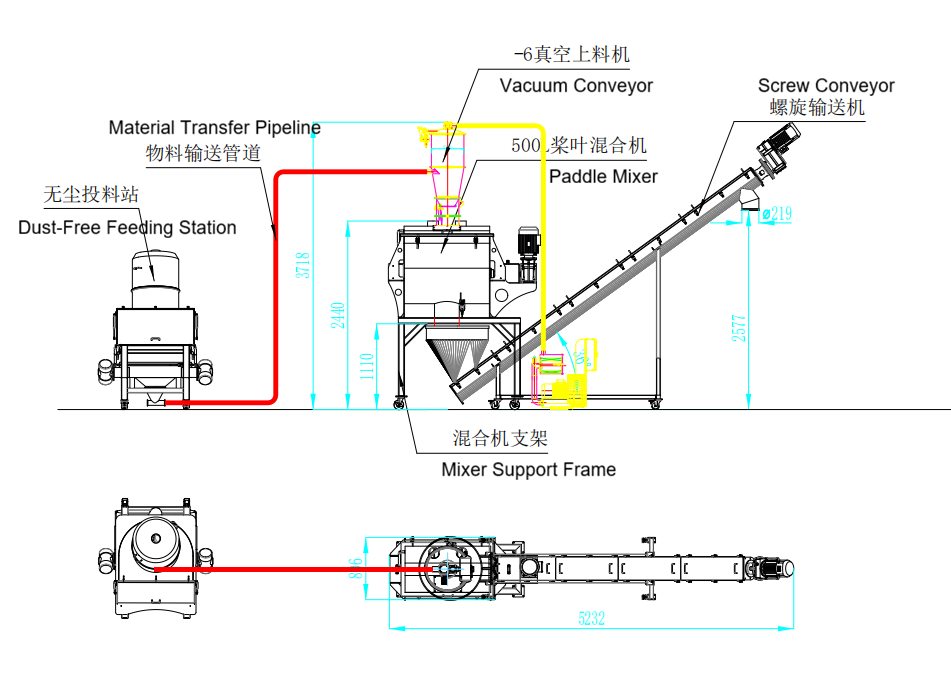
3D Rendering of the newly proposed closed-loop 500L mixing and vacuum feeding system.
5. The Final 20-Meter Turnkey Layout (April)
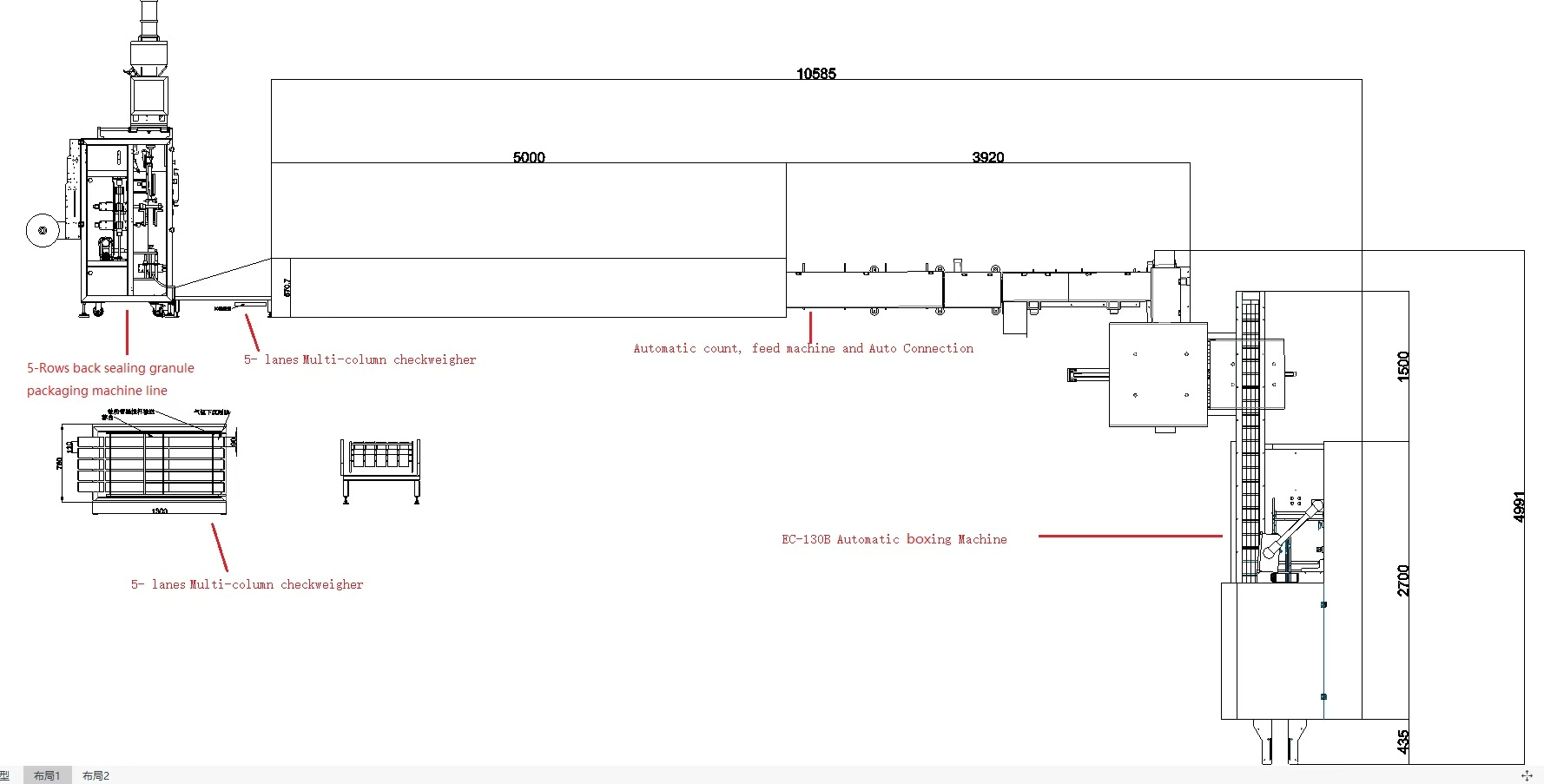
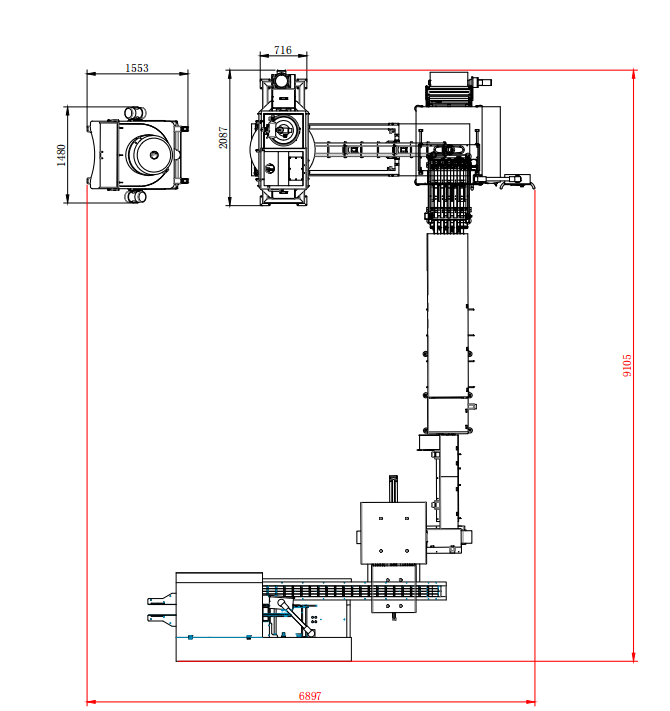
By April, the final engineering layout was confirmed. The entire production line stretched approximately 20 meters, transforming raw powder into shelf-ready retail cartons without any manual intervention.
Final Engineering Layout: A seamless 20-meter automated production line from mixing to cartoning.
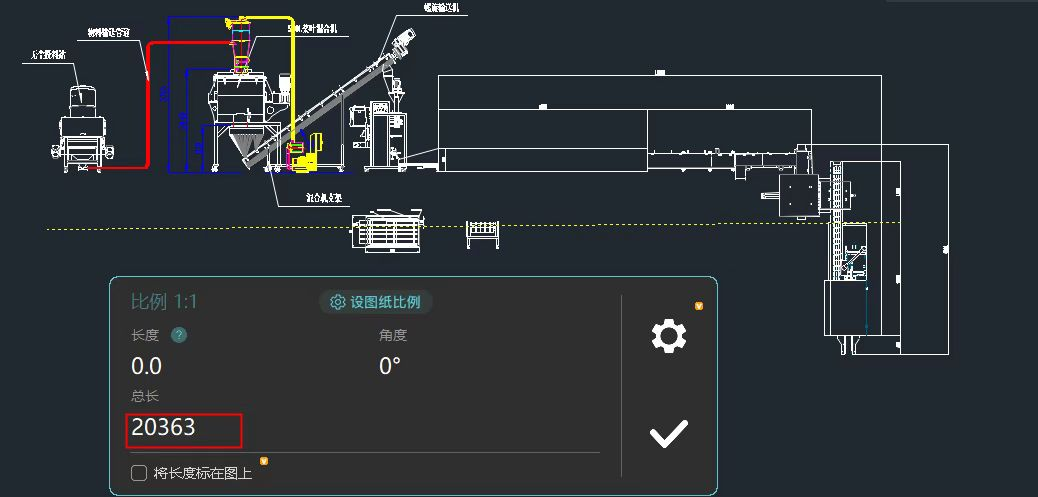
Engineering layout discussions confirming the ~20-meter line footprint and equipment placement.
6. Final Approval at the RosUpack Exhibition (June)
After a quiet period from mid-April to mid-May, the client's management stepped in to make the final decision. The decisive moment occurred during the RosUpack Exhibition in the EAEU region in June.
The client's boss personally visited our booth to inspect the cartoning machine we had on display.
Client visiting our booth to physically inspect the cartoning machine at the exhibition.
Impressed by the build quality, precise engineering, and our team's rigorous problem-solving approach over the previous months, the boss gave the final approval on the spot. The contract was signed and confirmed that very evening.
WhatsApp confirmation showing the final contract approval and success of the project.
Ready to Automate Your Powder Packaging Line?
Whether you are upgrading from standalone machines or building a new facility from scratch, our engineering team provides end-to-end turnkey solutions tailored to your space, hygiene standards, and capacity requirements. Contact us today for a custom layout design.

 EN