1. Project Background & Product Specifications
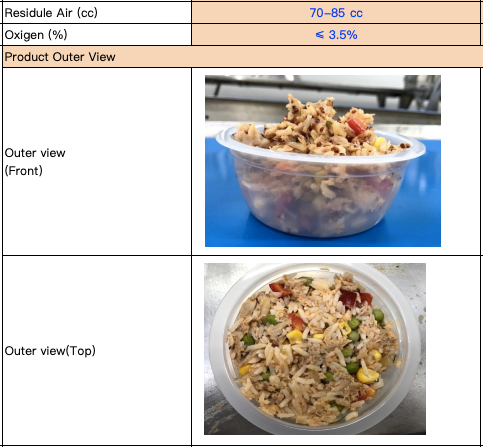
Our client, AAI, approached us with a challenging tray sealing application requiring extreme precision and customized gas mixing. Their product required MAP (Modified Atmosphere Packaging) with strict residual oxygen limits, complex sealing patterns, and high-speed output.
|
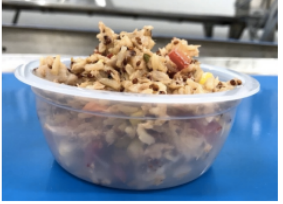
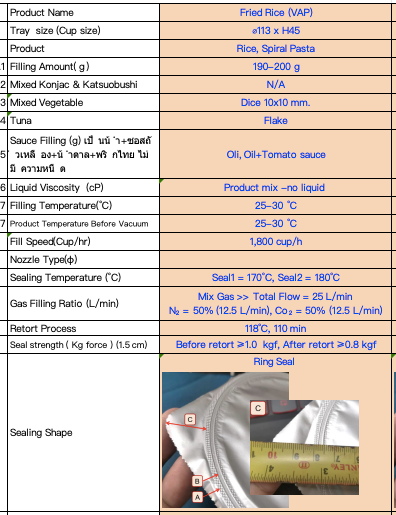
Product samples provided by the client.
|
Detailed tray dimensions and specifications.
|
Product & Process Requirements:
- Tray Specification: Cup mouth diameter < 115mm; configured for 1-out-of-5 lanes.
- Speed Target: Up to 2,400 cups/hour with residual oxygen < 1%.
- Sealing Temperature: Maximum 200°C; sealing performed in a single pass.
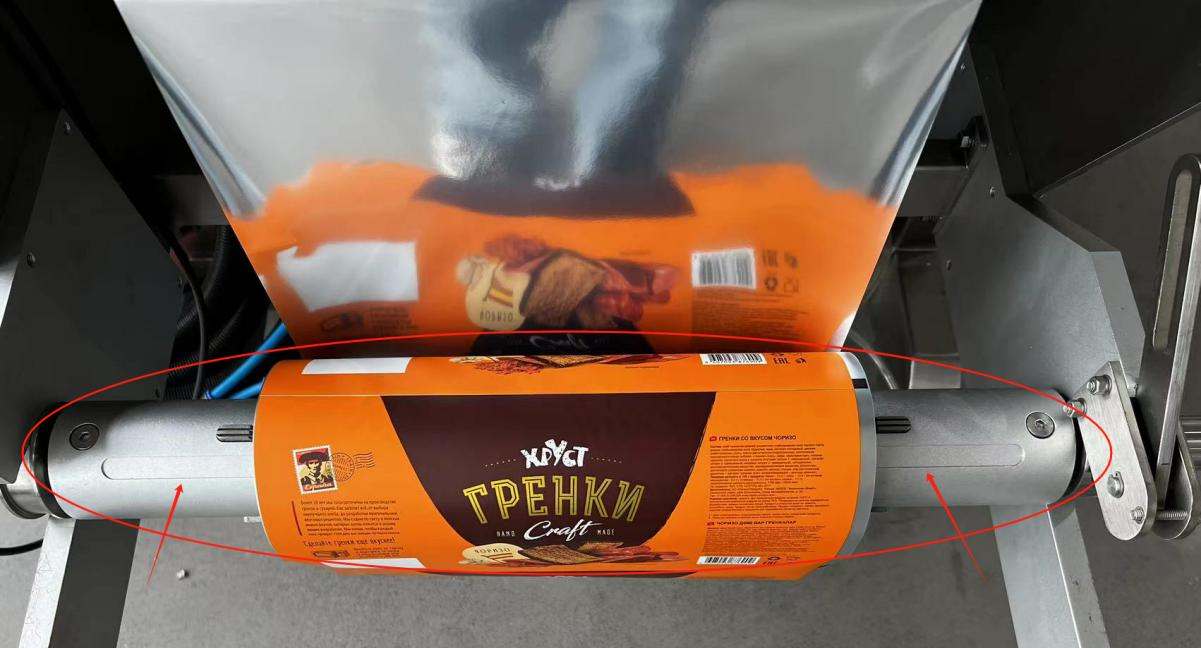
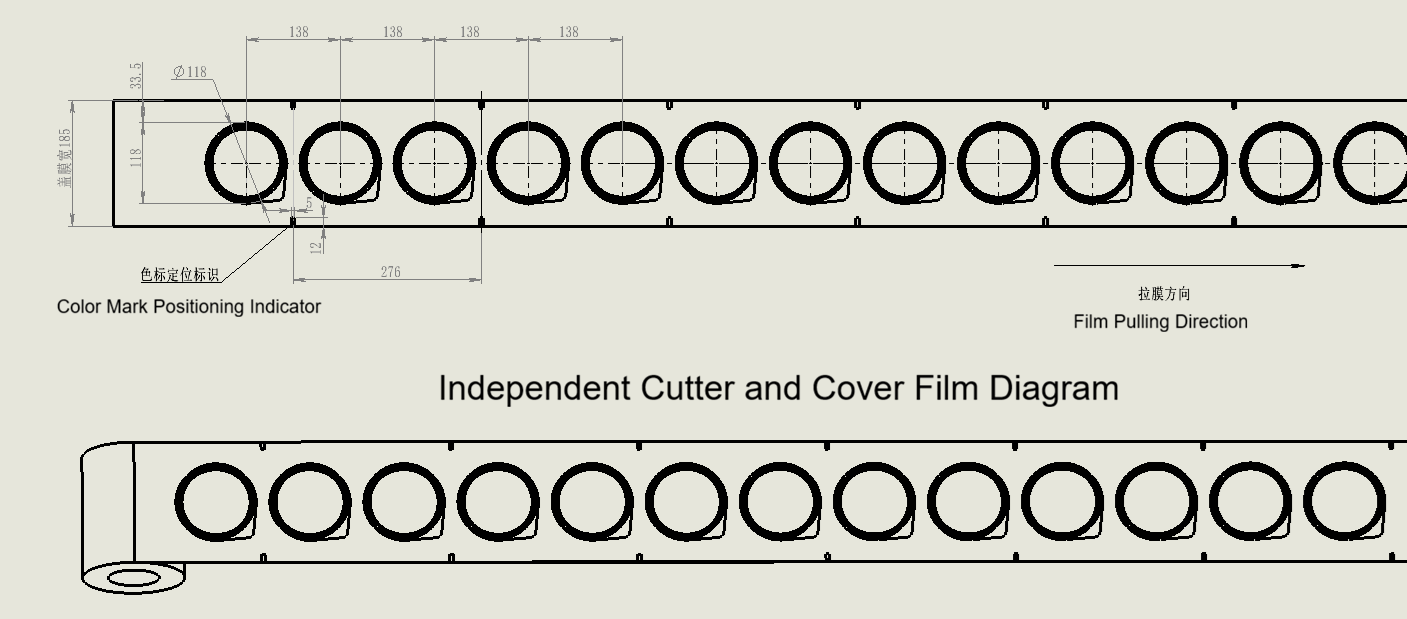
- Film Specification: Custom 185mm width film (client previously used 150mm, so artwork layout required re-engineering to match our tooling).
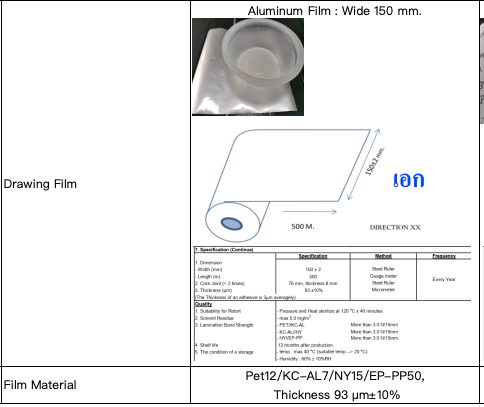
Original 150mm vs. required 185mm film width comparison.
2. Engineering Challenge 1: Two-Stage Custom Sealing Pattern
The most complex technical challenge came from the client's existing product samples. Their current packaging uses a unique two-stage sealing pattern: a full mesh-grid pattern pressed first, followed by a solid flat ring pressed on top.
Our standard equipment can only perform a single sealing pass. This meant a portion of the sealing area near the edge would not be pressed (visible as an empty ring on the right side of the sample).
|
Client's original two-stage sealing pattern with solid outer ring.
|
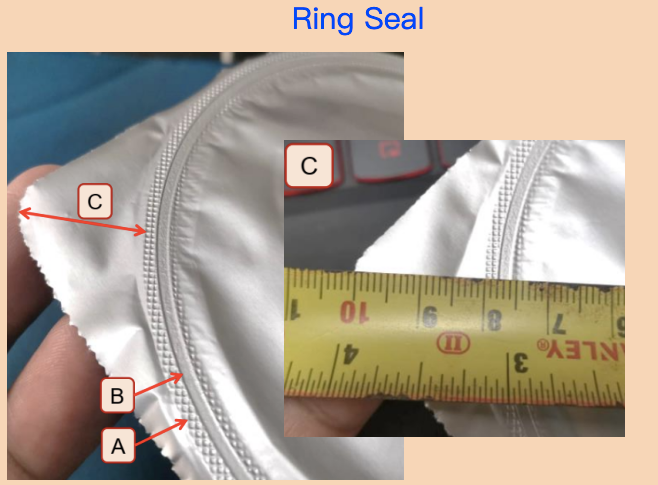
Standard single-pass pattern showing the unsealed outer ring area.
|
To match the client's requested finish, our engineering team customized the tooling to press a flat center with a mesh-grid outer ring. While this was the best physical solution, we proactively communicated with the client that the actual sealing performance would need to be validated during commissioning.
3. Engineering Challenge 2: Upgrading from TA350 to TA360
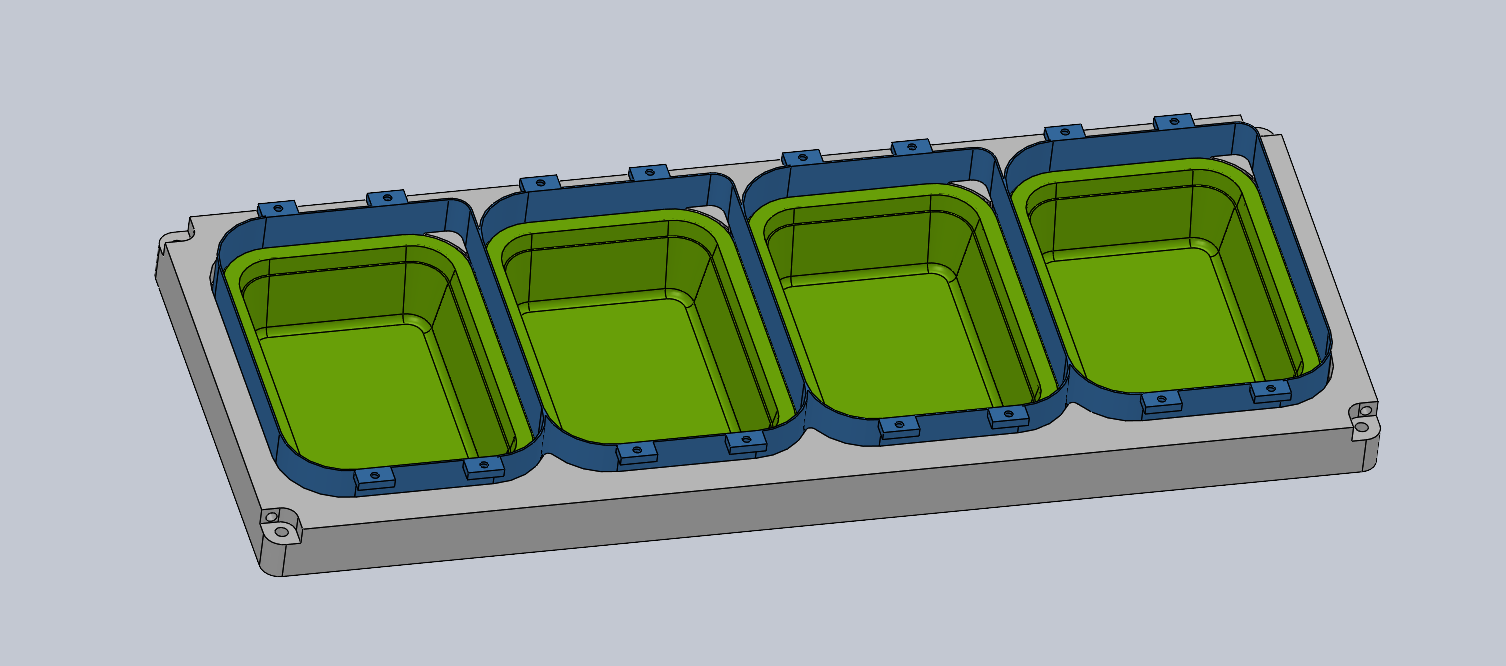
The original proposal was based on our TA350 model, but deeper analysis revealed a critical issue with the mold tooling. On the TA350, the mold length is shorter, meaning the distance between adjacent cups is tight. The cutting knives are welded together as one solid piece—if one cutting blade fails, the entire assembly must be replaced, leading to higher maintenance costs and lower tooling precision.
TA350 mold: compact layout with welded cutting knife assembly.
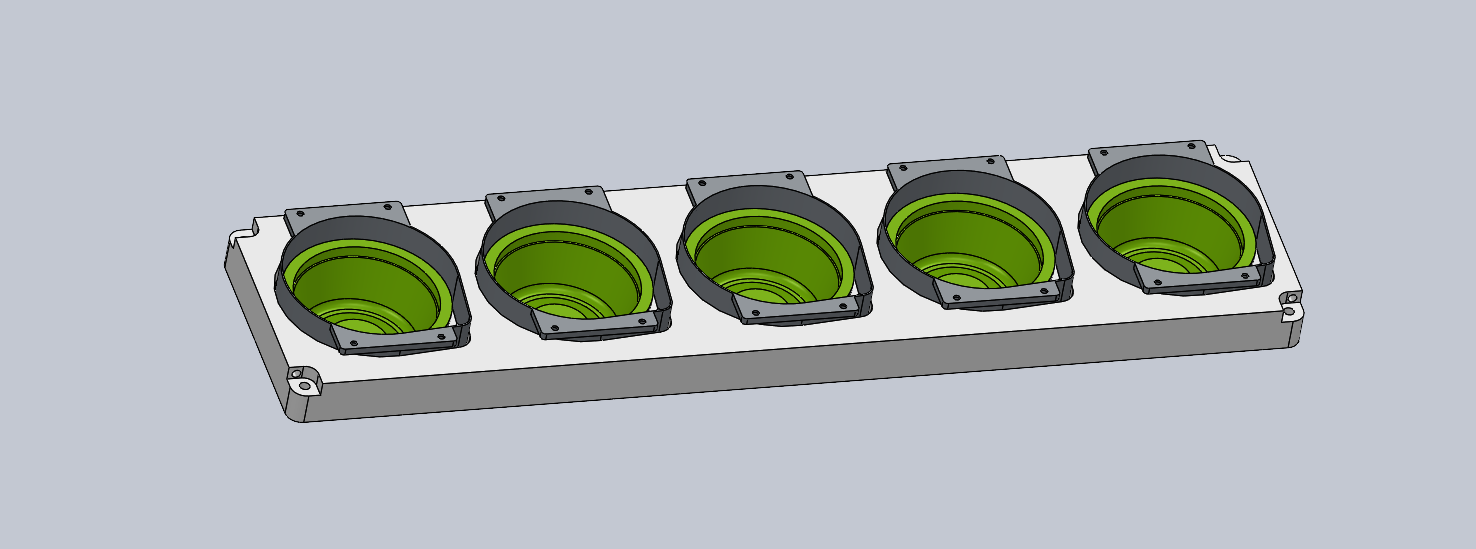
We proactively recommended upgrading to our TA360 model. The TA360 features a longer mold with greater spacing between cups. Each cutting knife is individually manufactured and replaceable, providing significantly higher dimensional precision and easier maintenance.
TA360 mold: extended layout with independent, precision-machined cutting knives.
4. Engineering Challenge 3: Customized Gas Mixing System
The client's gas mix required 50% CO2 and 50% N2. This presented a choice between two gas mixing technologies:
- Fixed-Ratio Gas Mixer: Lower cost but inflexible.
- Touchscreen-Adjustable Mixer: Higher cost, but allows precise adjustment of multi-gas ratios (binary or ternary).
To keep the project cost-efficient, we analyzed both options: a fixed-ratio system would require 2 separate mixer units, while a single touchscreen-adjustable binary mixer could handle both gases in one unit.
 Gas mixing system configuration analysis: Fixed-ratio (2 units) vs. Touchscreen adjustable (1 unit).
We matched the gas mixer's flow capacity to the TA360's sealing speed, ensuring no production bottleneck.
5. Engineering Challenge 4: Temperature, Vacuum Effect & Pre-Sealing Preparation
Two additional operational challenges required careful client communication:
Product Temperature vs. Residual Oxygen
The client's product enters the machine at approximately 30°C. Higher temperatures can compromise the ability to achieve the strict < 3.5% residual oxygen target. We proactively consulted our technical director and communicated this risk to the client, asking them to confirm whether their existing process achieves this at this temperature.
Pre-Seal Material Handling
Before the product enters the tray sealer, the material must be pressed flat—never above the cup rim level. This prevents contamination of the sealing surface and ensures an airtight seal.
Material must be pressed flat, never exceeding the cup rim plane.
6. Engineering Challenge 5: Aluminum Foil Lid & Vacuum Appearance
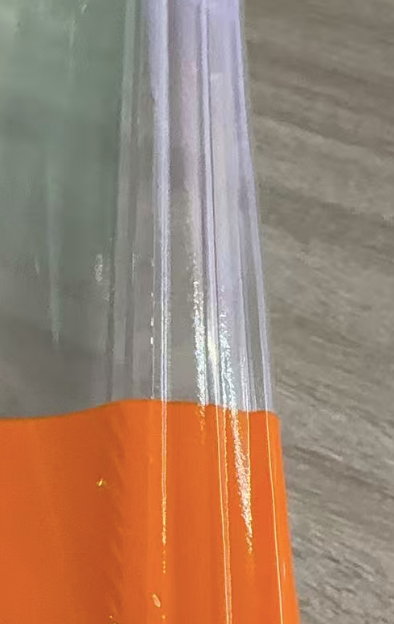
The client uses an aluminum foil lidding material. With 50% CO2 in the gas mix, after sealing and gas replacement, the aluminum foil will visibly sink inward the next day, creating a vacuum-like appearance.
We proactively communicated this cosmetic effect to the client, explaining that it is a normal physical reaction. The client confirmed acceptance of this appearance as part of the project specification.
Tray sealing diagram showing the foil lid sealing process.
Ready to Solve Your Complex Tray Sealing Challenges?
From custom sealing patterns and precision mold upgrades to multi-gas MAP systems, our engineering team thrives on complex technical challenges. Contact us to discuss your specific application requirements.

 EN