 EN
How to Reduce Film Waste with a Premade Pouch Packaging Machine?
2026/09/20
Premade Pouch Machines: Reduce Film Waste, Cut TCO & Achieve Faster ROI

2026/09/29
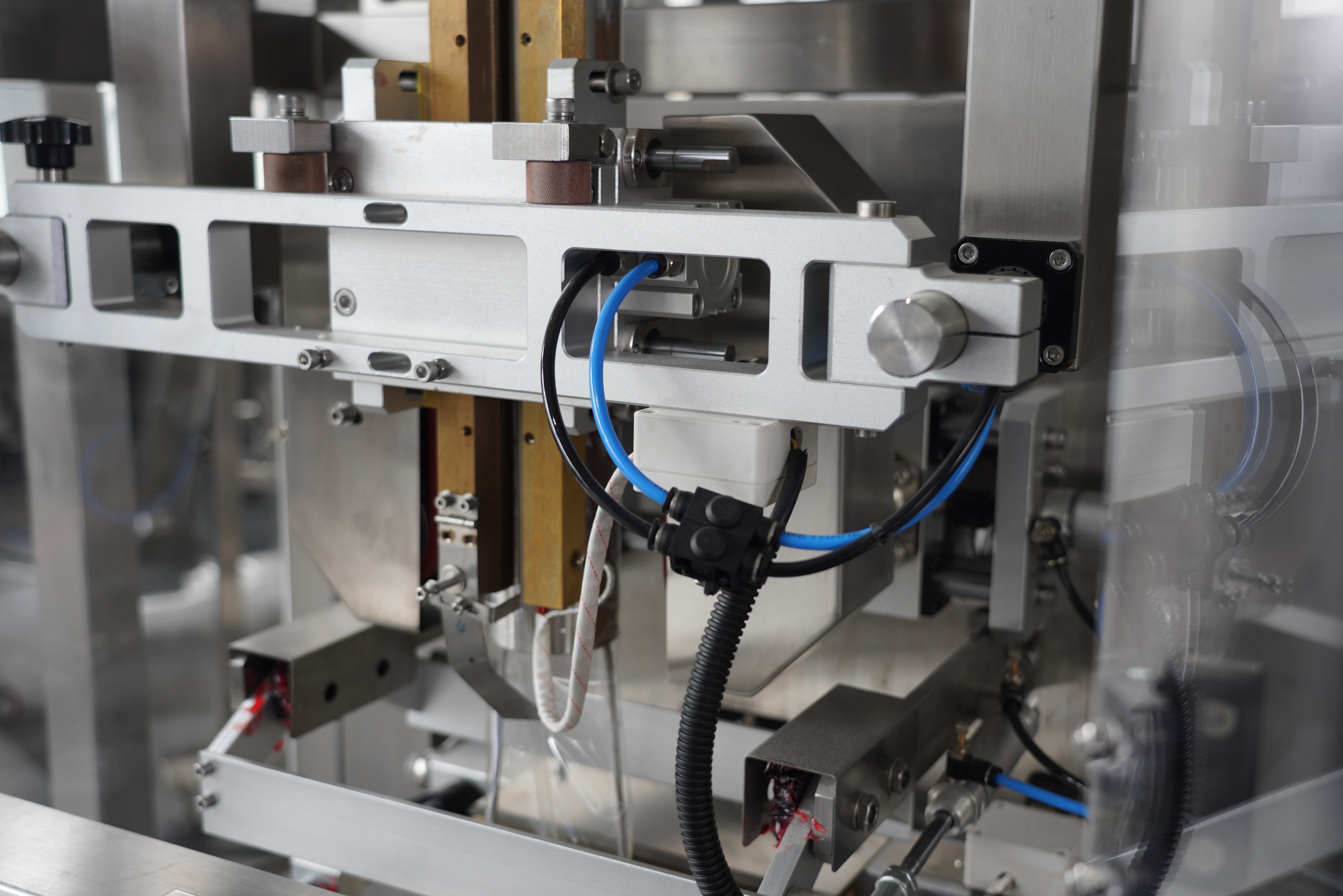
Selecting the right packaging equipment is one of the most critical decisions a manufacturing operation can make. A vffs machine represents a significant investment and directly impacts production speed, product quality, and operational costs. Understanding the difference between single and twin configurations is essential for aligning your choice with business objectives, production volume, and available facility space. This guide provides the technical insight and practical framework needed to make an informed decision about which vffs machine configuration best serves your operation.
The fundamental distinction between single and twin vffs machine designs lies in their sealing and forming architecture. A single vffs machine uses one set of forming tubes, sealing jaws, and drive mechanisms to create, fill, and seal packages sequentially. A twin vffs machine operates two parallel forming stations simultaneously, effectively doubling throughput without necessarily doubling all operational complexities. Both configurations deliver reliable vertical form fill seal technology, but they serve different production environments and business requirements. Knowing which vffs machine fits your operation requires evaluating production volume, available capital, floor space, and maintenance resources.
A single vffs machine operates with one forming tube that draws film from a roll, forms the tube around the product, applies seals at the bottom and sides, and cuts the package. This linear, sequential process has been the industry standard for decades and remains the backbone of many packaging lines. The vffs machine design is straightforward: film unwinds, product is metered into the forming tube, the tube wraps around the product, heat seals are applied, and the finished package is ejected. A vffs machine with single configuration requires less complex control logic and fewer servo motors, resulting in lower equipment cost and simpler maintenance procedures.
Single vffs machine speed typically ranges from 40 to 120 packages per minute, depending on product size, film type, and seal quality requirements. For many small to medium-sized operations, a vffs machine running at these speeds meets market demand without excess capital expenditure. The throughput of a vffs machine in single configuration is predictable and linear; if you need 60 packages per minute, a single vffs machine can be selected to match that exact requirement. Lower speed requirements make a vffs machine economical because you avoid paying for excess capacity you will not use. Many food, snack, and small-format packaging facilities find that a vffs machine with single seal configuration is perfectly adequate for their annual volume targets.
A twin vffs machine incorporates two independent forming and sealing stations that operate in parallel on a single machine frame. While one station is forming and sealing a package, the second station is simultaneously performing the same function on a different section of film. This synchronized dual-process design means a twin vffs machine can achieve roughly double the throughput of a comparable single vffs machine. The vffs machine architecture requires coordinated servo control, dual film pathways, and carefully synchronized cutting and sealing timing. A twin vffs machine demands more sophisticated automation controls but delivers significant speed advantages for high-volume operations.
A twin vffs machine typically runs at 80 to 240 packages per minute, effectively serving operations that require consistent output above what a vffs machine with single configuration can deliver. For businesses targeting 150 packages per minute or higher, investing in a twin vffs machine often provides better cost-per-unit economics than running two separate single vffs machine units. The vffs machine efficiency improves because one operator can manage a twin configuration, whereas two separate machines require additional labor. Many enterprises choose a twin vffs machine because the throughput advantage enables them to consolidate packaging lines and reduce facility footprint while maintaining production targets.
A single vffs machine typically costs 30 to 40 percent less than a twin vffs machine of equivalent quality and build standard. However, total cost of ownership extends beyond purchase price. A vffs machine with single configuration requires more floor space per unit of throughput if you run multiple units. A twin vffs machine consolidates dual throughput into a compact footprint, reducing real estate costs, utility consumption, and maintenance labor for operations producing over 100 packages per minute. Calculate your breakeven point by comparing the vffs machine capital outlay against five-year operating cost reductions from consolidated utilities and labor. For high-volume operations, a twin vffs machine often achieves lower cost-per-package production despite higher upfront investment.
A single vffs machine occupies approximately 3 to 4 square meters of production floor space. A twin vffs machine typically requires 5 to 6 square meters, meaning the vffs machine footprint per package of output is significantly smaller. In facilities where floor space commands premium value, a twin vffs machine delivers better spatial efficiency. Conversely, a vffs machine in single configuration offers modular flexibility; you can add another machine incrementally as demand grows without replacing your entire line. Consider your facility layout, material flow logistics, and growth trajectory when evaluating whether a vffs machine with single or twin architecture suits your expansion plans. A vffs machine choice should align with both current needs and anticipated volume increases over the equipment lifecycle.
A single vffs machine features straightforward mechanical systems with fewer servo motors, sensor arrays, and control points to monitor. Maintenance staff can quickly diagnose issues and perform repairs without extensive specialist training. A twin vffs machine introduces additional complexity; synchronized servo tuning, dual film path troubleshooting, and coordinated seal timing require more sophisticated diagnostic skills. Service technicians familiar with vffs machine technology must be available for a twin configuration. However, many modern vffs machine manufacturers provide remote diagnostics and cloud-connected monitoring for twin systems, enabling faster issue resolution. Evaluate your technical team capability and the vffs machine manufacturer's support infrastructure when deciding between single and twin configurations.
Choose a single vffs machine if your production target is below 80 to 100 packages per minute, if capital budget is constrained, or if your facility has limited floor space and you do not anticipate significant volume growth. A vffs machine with single configuration is ideal for specialty products, small batch runs, or operations where flexibility and cost minimization are primary drivers. Additionally, if your technical team lacks experience with advanced servo automation, a vffs machine in single format offers simpler training and troubleshooting pathways.
A twin vffs machine delivers approximately double the throughput of a single unit within a compact footprint, reducing cost-per-package production significantly for high-volume operations. The vffs machine efficiency gain also extends to labor; one operator manages both sealing stations simultaneously rather than staffing two separate lines. A twin vffs machine consolidates utilities, reduces maintenance overhead, and enables higher output without proportional increases in floor space or staffing.
Compare the vffs machine purchase cost of one twin unit against two single units, then factor five-year operating costs including labor, utilities, maintenance, and facility space allocation. A twin vffs machine typically achieves better ROI when your annual volume exceeds 50 to 60 million units. Calculate your breakeven point by dividing the capital difference by monthly savings from consolidated operations. If the vffs machine breakeven period is less than three years, the twin configuration likely offers superior long-term economics.

2026/09/20
Premade Pouch Machines: Reduce Film Waste, Cut TCO & Achieve Faster ROI

2026/09/20
Cut Premade Pouch Machine Changeover Time by 40% with Proven Best Practices

2026/09/20
Premade Pouch Machines: Boost Throughput, Cut Waste & Improve ROI

2026/09/20
Rotary vs Inline Premade Pouch Machines: Speed, ROI & Scalability Compared

2026/09/20
Premade Pouch Machine: Boost Throughput, Cut Labor Costs & Improve Seal Integrity

2026/09/21
Premade Pouch Machine: Pouch Types, Materials & Filling Guide

