 EN
How to Reduce Film Waste with a Premade Pouch Packaging Machine?
2026/09/20
Premade Pouch Machines: Reduce Film Waste, Cut TCO & Achieve Faster ROI

2026/08/18
Across twelve trade shows in 2025 — from Guangzhou and Frankfurt to Bangkok, Moscow, Jakarta, and Dubai — our engineers had several thousand conversations at the booth. Strip away the language differences and the same six questions came up again and again.
This article answers them directly, using the rotary premade pouch platform as the reference point, because that is the machine category buyers asked about most.
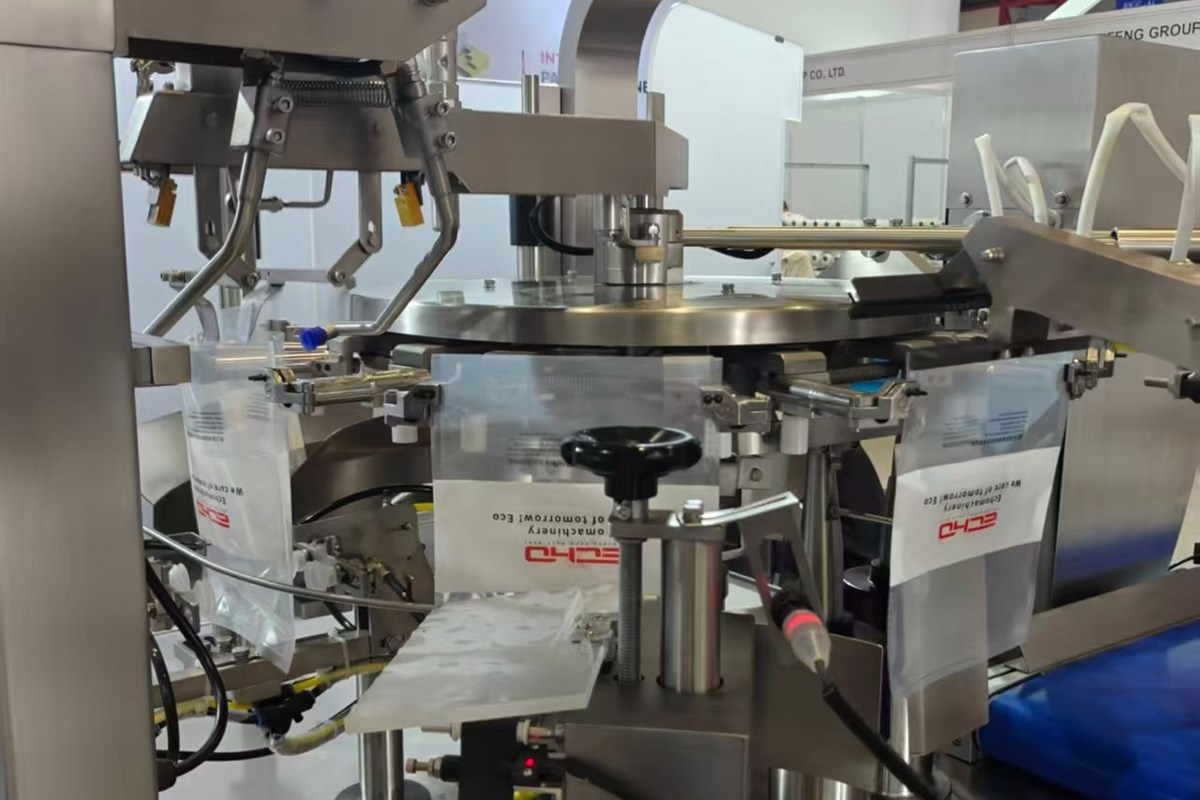
Rotary station grippers holding premade pouches through filling and sealing
This has replaced speed as the opening question, and it reflects a real structural change in the market. Ten years ago a food producer might have run three SKUs in two bag sizes. Today the same producer runs fifteen SKUs, half of them seasonal or private-label, across four or five formats.
A rotary premade pouch platform is well suited to this because the pouch itself carries the format. The machine picks a finished bag from the magazine, opens it, fills it, and seals it. Change the bag, and — within the platform's size envelope — you change the product presentation without rebuilding the machine.
Our MR series handles stand-up pouches, zipper bags, gusseted bags, quad-seal bags, spouted pouches, and tray-style packs. The MRM configuration is specifically re-engineered at the gripper and cam level to automate quad-seal bags, which are notoriously difficult to hold square through the filling stations.
Honest numbers matter more than headline numbers, so here is the range across the platform:
The important caveat we give every buyer: rated speed assumes a free-flowing product, a stable upstream feed, and a bag material within specification. Sticky, oily, or highly variable products will run below rated speed on any machine from any manufacturer. We would rather state that at the booth than in a warranty dispute.
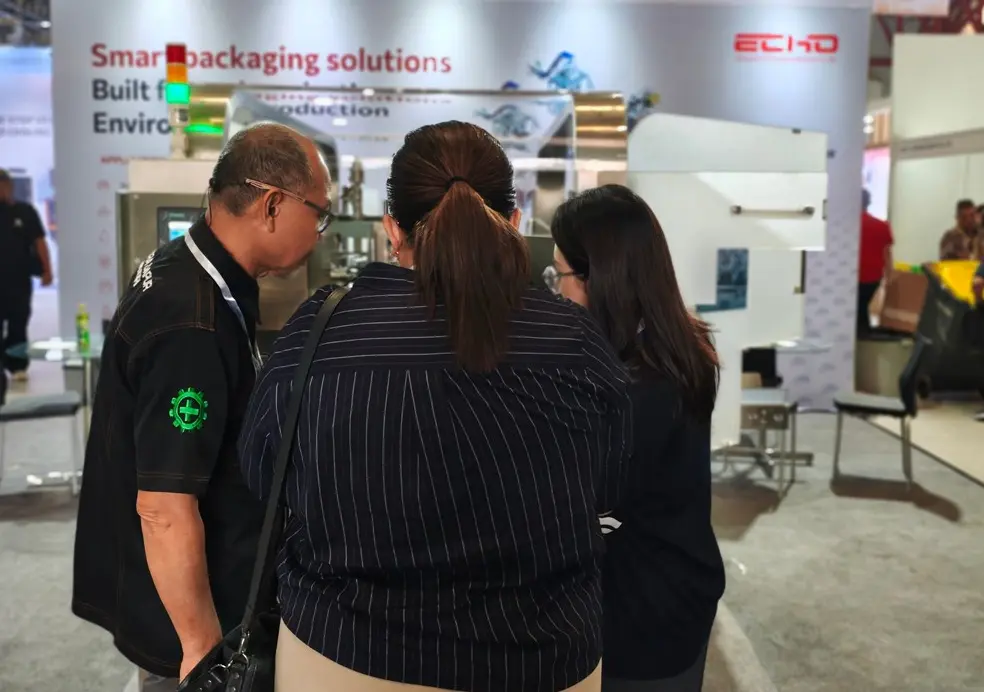
Buyers reviewing machine configuration options on the show floor
This is where the 2025 conversations got specific. Buyers wanted to know minutes, not adjectives. The honest answer depends on how far the format is moving:
Recipe storage on the PLC is what makes the difference in practice. Once a format is commissioned, returning to it should be a recall from a menu, not a re-tuning exercise.
The cam and indexing drive is the heart of a rotary machine, and it is where cheap machines fail first. Our cams are made from 20CrMnTi with a tolerance under 0.02 cm, and a fully automatic circulating lubrication system feeds the cam assembly continuously. The indexing drive is custom-specified in an independent housing and CNC-finished.
We say this at every show because it is the difference a buyer cannot see during a ten-minute demo but will feel in year three.
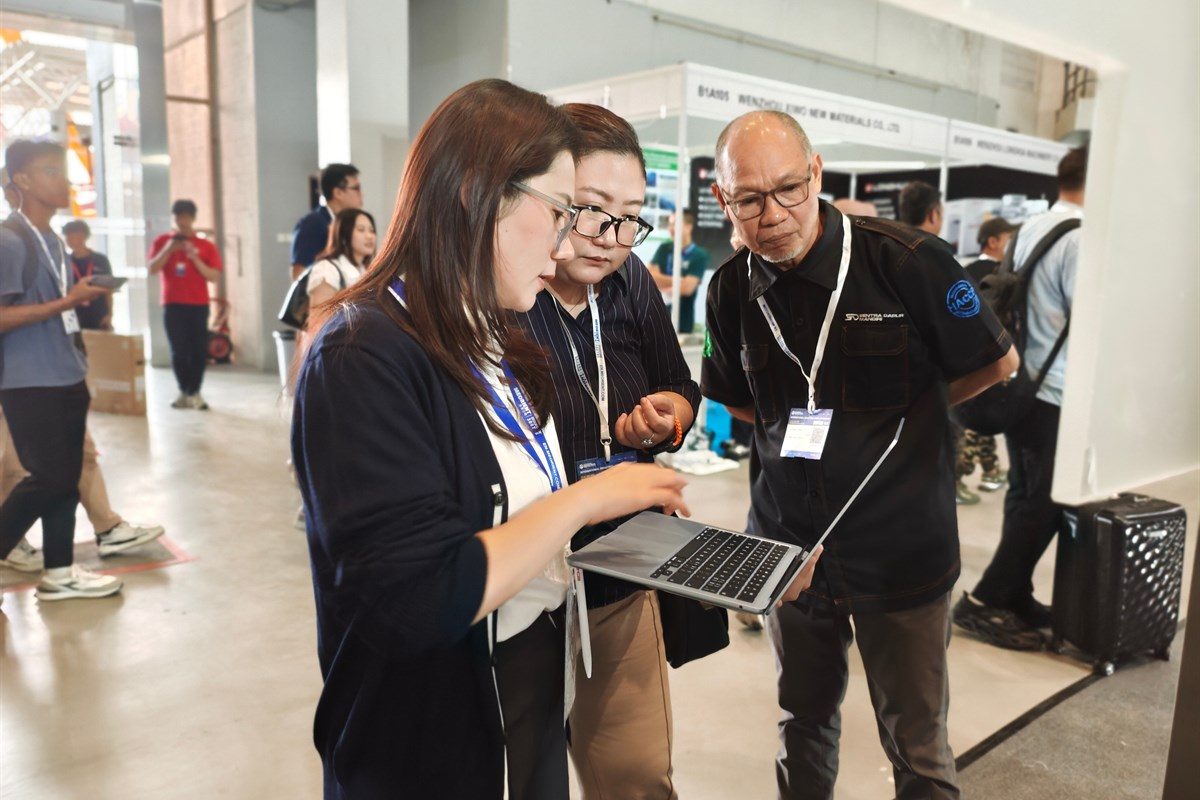
An ECHO engineer presenting a line layout to overseas customers
Three trends dominated the technical conversations of 2025.
Sustainable materials are now a machine problem, not just a purchasing problem. Mono-material recyclable films, paper-based laminates, and thinner gauges all behave differently under heat and pressure. They have narrower sealing windows and less forgiveness for temperature drift. Equipment has to be tuned for these materials rather than simply set to the old parameters — and buyers are right to test their intended film on the machine before committing.
Vacuum and modified-atmosphere formats are expanding beyond meat. Vacuum flattening, tray sealing, and vacuum pouch systems are being adopted for cheese, prepared meals, shisha, eggs, and pet treats. Shelf-life extension is being used as a distribution-range strategy: a longer shelf life means a larger addressable market.
Line integration is replacing machine procurement. The most frequent request in 2025 was not "quote me a bagger" but "quote me from the feeding system to the sealed case." Feeding, multihead weighing, bagging, checkweighing, conveying, case erecting, packing, and sealing — the value is in the handoffs between these stages, and a mismatched interface between two vendors is where throughput quietly disappears.
Labour availability is driving automation decisions. In several markets — including Europe, the Gulf, and increasingly Southeast Asia — the business case for automation is now written around the difficulty of hiring and retaining line staff, not just around hourly cost.
The last question is always the most important one, and it is the reason repeat customers matter more to us than new logos.
Our commitment is unchanged: a two-year warranty, dedicated after-sales engineers, remote diagnostics and video-guided troubleshooting, spare parts in stock and dispatched within 48 hours, and two sets of wear parts shipped with every machine alongside the manual and maintenance guide. Every machine is run through customer-product adaptation testing and full-load testing before it leaves the factory.
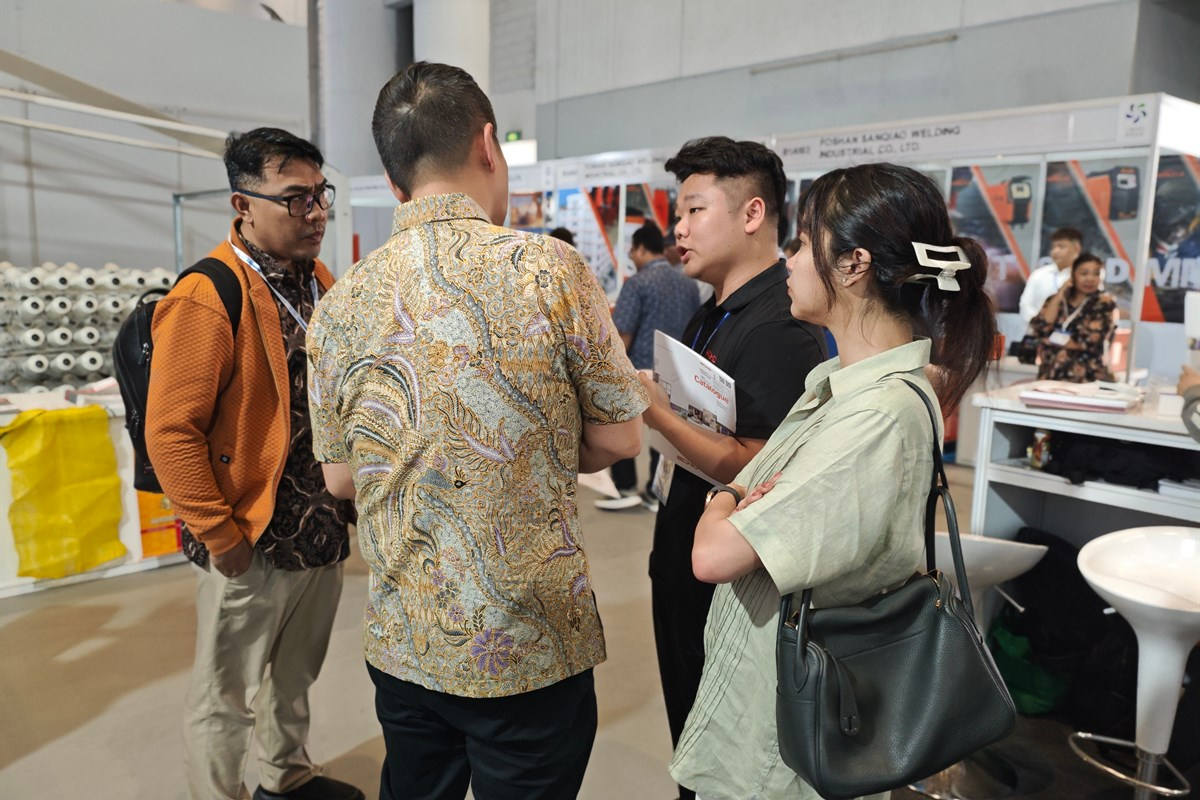
Technical catalogue and specification discussion with regional partners
ECHO Machinery has been developing and producing rotary premade pouch equipment since the early 2000s, with more than 25 years of packaging machinery experience behind the team. The company operates a 98,000 m² facility, holds over 90 patents plus CE and ISO certifications, and produces more than 2,600 machines annually for customers in over 50 countries.
But the specification sheet is not the point. The point is that a packaging machine only earns its price when it runs on your product, in your plant, on your shift schedule — and keeps running after the installation engineer flies home.
If you have a product you would like tested, send us a sample and a target bag format. We will tell you honestly which configuration fits, and which does not.

2026/09/20
Premade Pouch Machines: Reduce Film Waste, Cut TCO & Achieve Faster ROI

2026/09/20
Cut Premade Pouch Machine Changeover Time by 40% with Proven Best Practices

2026/09/20
Premade Pouch Machines: Boost Throughput, Cut Waste & Improve ROI

2026/09/20
Rotary vs Inline Premade Pouch Machines: Speed, ROI & Scalability Compared

2026/09/20
Premade Pouch Machine: Boost Throughput, Cut Labor Costs & Improve Seal Integrity

2026/09/21
Premade Pouch Machine: Pouch Types, Materials & Filling Guide

